
Pattern 01
SDK pattern
Place evaluation close to application code when teams want direct control over request context and decision handling.
Runtime security for AI agents
Thoth, Aten’s runtime security platform, checks agent tool calls against your policies before they run. Allow approved actions, require review for sensitive ones, and block policy violations—with a record of each decision.
Bring an agent workflow. We’ll walk through its integration, policy decisions, and evidence.
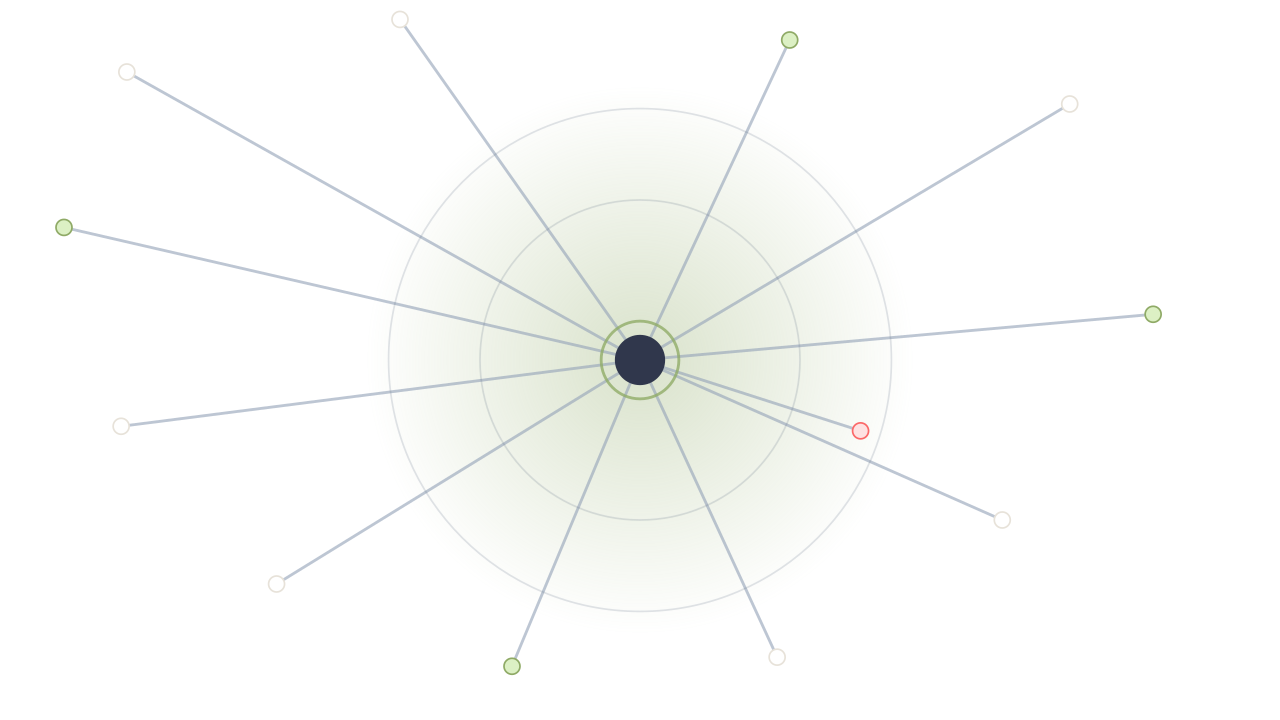
Illustrative policy scenario
An accounts-payable agent requests a supplier bank-detail change. The workflow needs finance approval before it can continue.
Requested action
The integration sends the action and available task context to Thoth.
Policy
Bank-detail changes need approval, even when the agent has access.
Decision · STEP_UP
The integration holds the action pending the required approval.
Decision evidence: a decision identifier, policy reference, timestamp, and reason connect the requested action to its outcome.
Institutional backing
DNX Ventures · Vanavil Ventures
Standards participation
Cloud Security Alliance · AARM working group
The post-approval gap
An agent can have valid access and still request an action outside its task. Thoth evaluates the action’s context and your policies at the integrated execution boundary.
Integration and deployment
Integrate through SDK or gateway patterns based on the application and operating boundary. Scope the architecture for cloud or customer-controlled environments during evaluation.
Pattern 01
Place evaluation close to application code when teams want direct control over request context and decision handling.
Pattern 02
Centralize evaluation in the path between agents and tools when teams need a shared enforcement boundary.
Deployment patterns can be scoped for cloud or customer-controlled environments based on the organization's technical and operational boundaries.
Industry applications
Apply explicit runtime decisions to sensitive workflows across regulated and mission-focused organizations.
Financial services
Apply contextual authorization before agents move money, change records, or invoke sensitive systems.
Healthcare
Put policy and evidence around agent actions involving sensitive data and operational decisions.
Government
Deploy action-level authorization and evidence within defined operational and security boundaries.
FAQ
Start with the deployment, decision, and control questions that shape a technical evaluation.
Thoth integrates in the execution path through SDK and gateway patterns selected for the deployment.
Common decisions allow an action, require approval, or block it. Additional outcomes and response handling depend on the SDK version and integration; consult the decision reference during evaluation.
No. Aten complements them by controlling actions after access is granted and before execution.
Aten is designed for regulated deployments; specific controls and deployment boundaries are confirmed during evaluation.
See runtime control in context
Walk through your agent workflows, deployment boundaries, and the decisions that matter most.